Soviet Mosaics of Minsk: A Walking Guide to the City's Hidden Monumental Art
Minsk is one of Europe's most underrated cities for fans of Soviet monumental art. Huge mosaic panels from the 1960s–1980s — epic scenes of labour, space and culture rendered in smalt and marble — still cover residential towers, metro passages and cinema façades across the city. Here is a route to the four most rewarding spots.
Vostok-1: the 'Golden Gates' mosaic towers
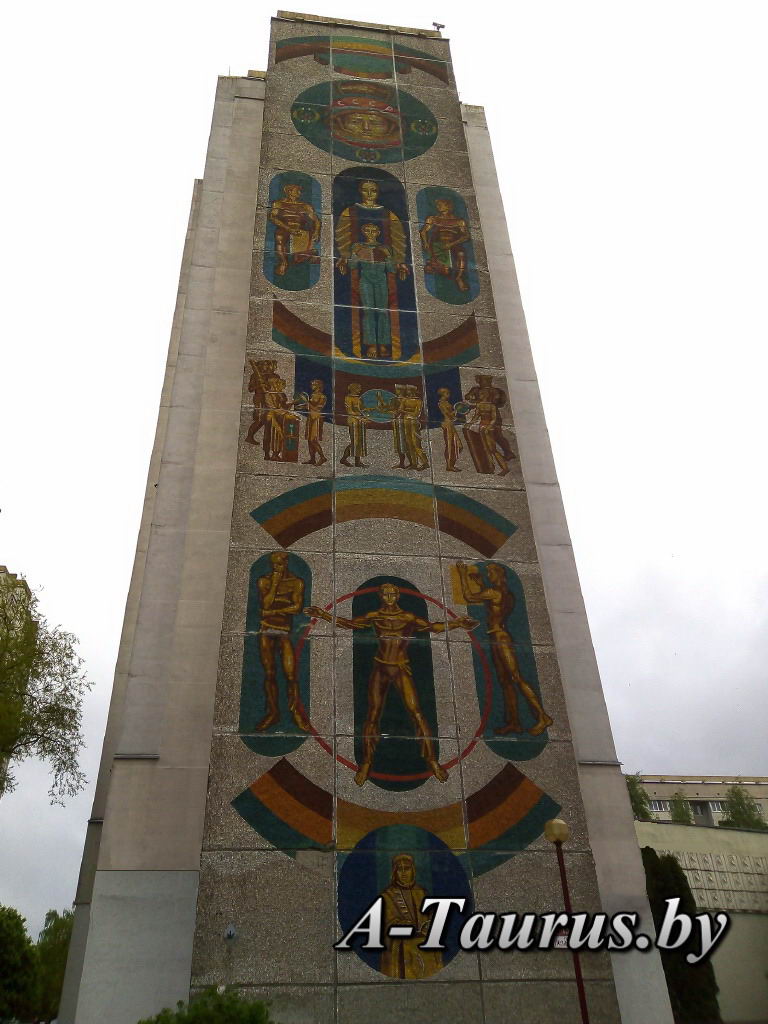
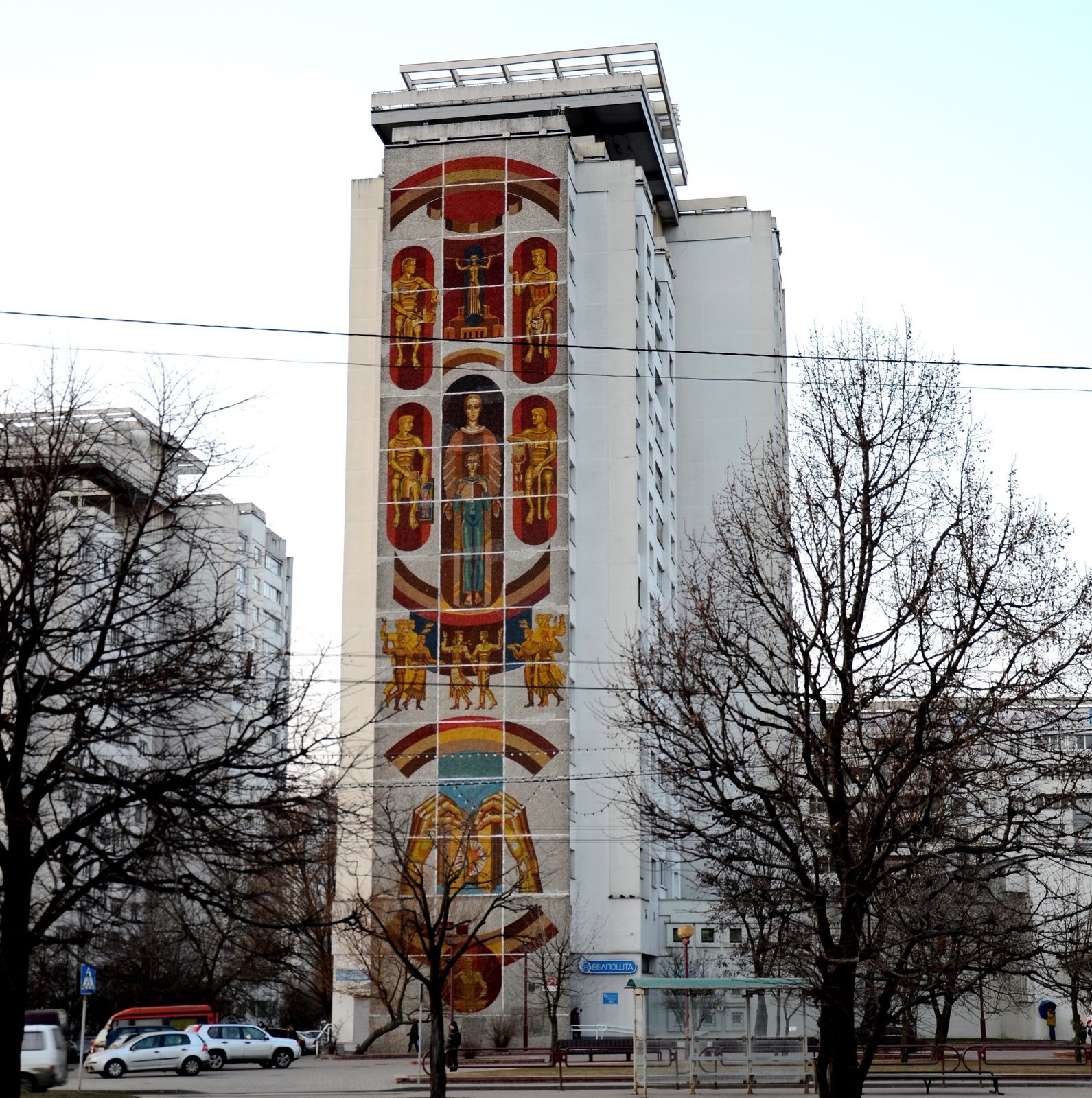
The route's centrepiece is the Vostok-1 neighbourhood, next to the metro station of the same name. Locals call its two high-rise residential towers the 'Golden Gates of Minsk': their end walls, facing Independence Avenue, are completely covered in mosaics on the themes of space exploration, science, labour and art. The panels were created in the 1970s by a group of Belarusian monumental artists and remain among the largest mosaic compositions in the country.
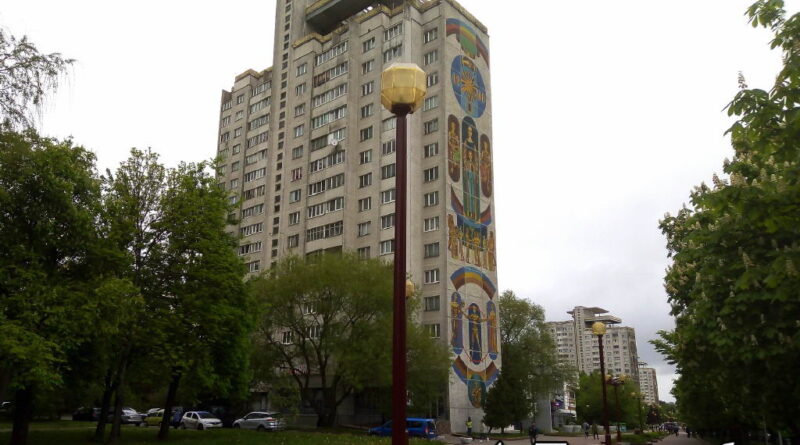
Each tower is divided into large registers: cosmic and scientific symbolism at the top, then figures of workers, scientists and cultural figures set within stylised arches below. The composition reads bottom-to-top as a single narrative about the Soviet vision of the future.
Oktyabrskaya metro station: Kuznetsov's Florentine mosaic
The underground passage at Oktyabrskaya metro station holds a large Florentine mosaic (a technique using inlaid natural stone and marble rather than smalt) by artist Andrey Kuznetsov, titled 'Stages of the Great Journey'. The composition tells the story of industrialisation and Soviet-era achievement through figures of workers, engineers and labour symbolism.
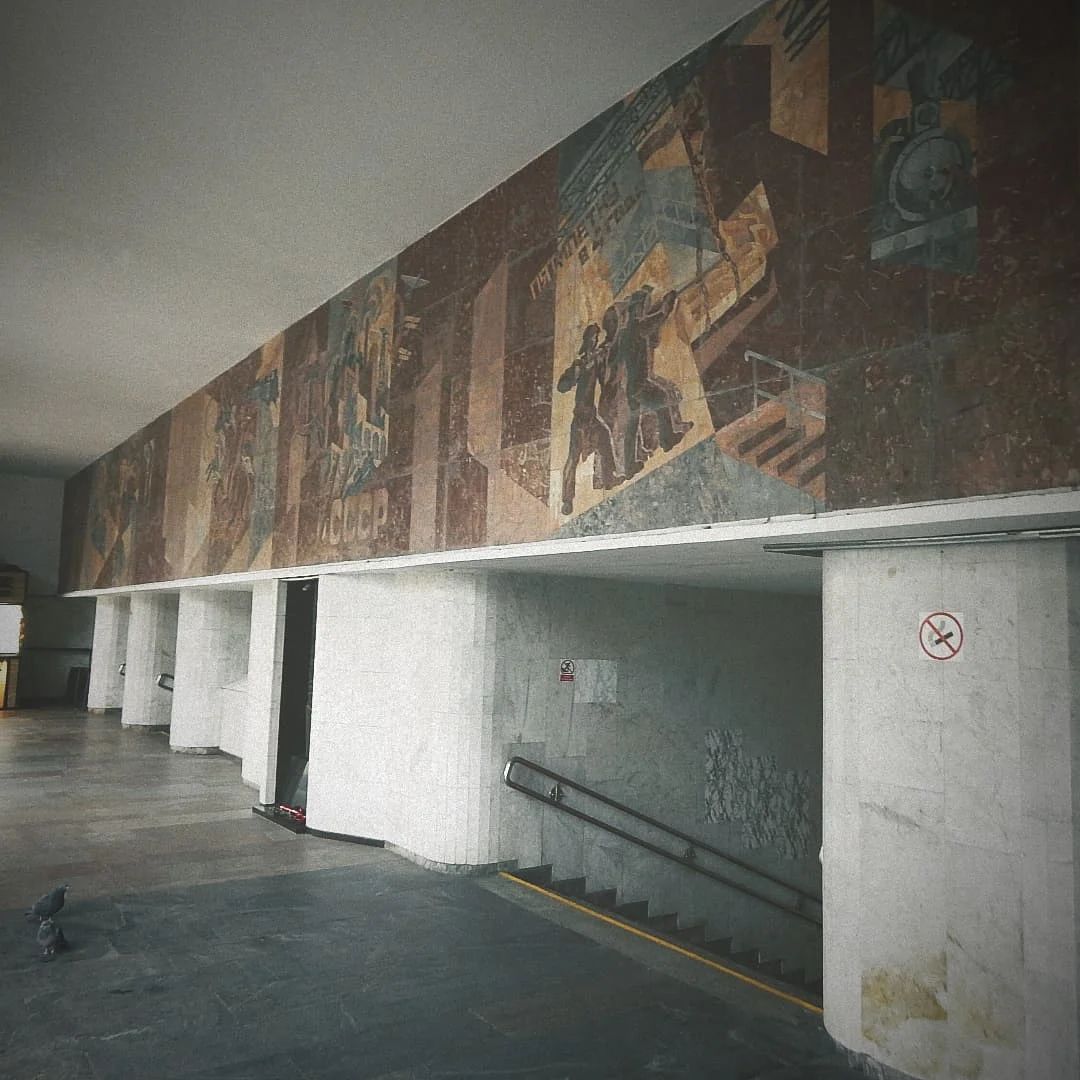
Unlike the bright colours of Vostok-1, this piece is dominated by a muted natural-stone palette — ochre, dark brown, grey marble. It's one of the few Florentine mosaics of this scale still preserved inside a working public space in Belarus.
Dom Kino: the partisan-themed frieze
The former Dom Kino (House of Cinema) building on Talbukhina Street is another example of Soviet monumental art built into a public façade. A long decorative frieze along the top of the building is dedicated to the partisan and wartime theme — a recurring motif in Belarusian monumental painting of the 1970s, where memory of the war sits alongside images of peaceful labour and cinema as an art form.
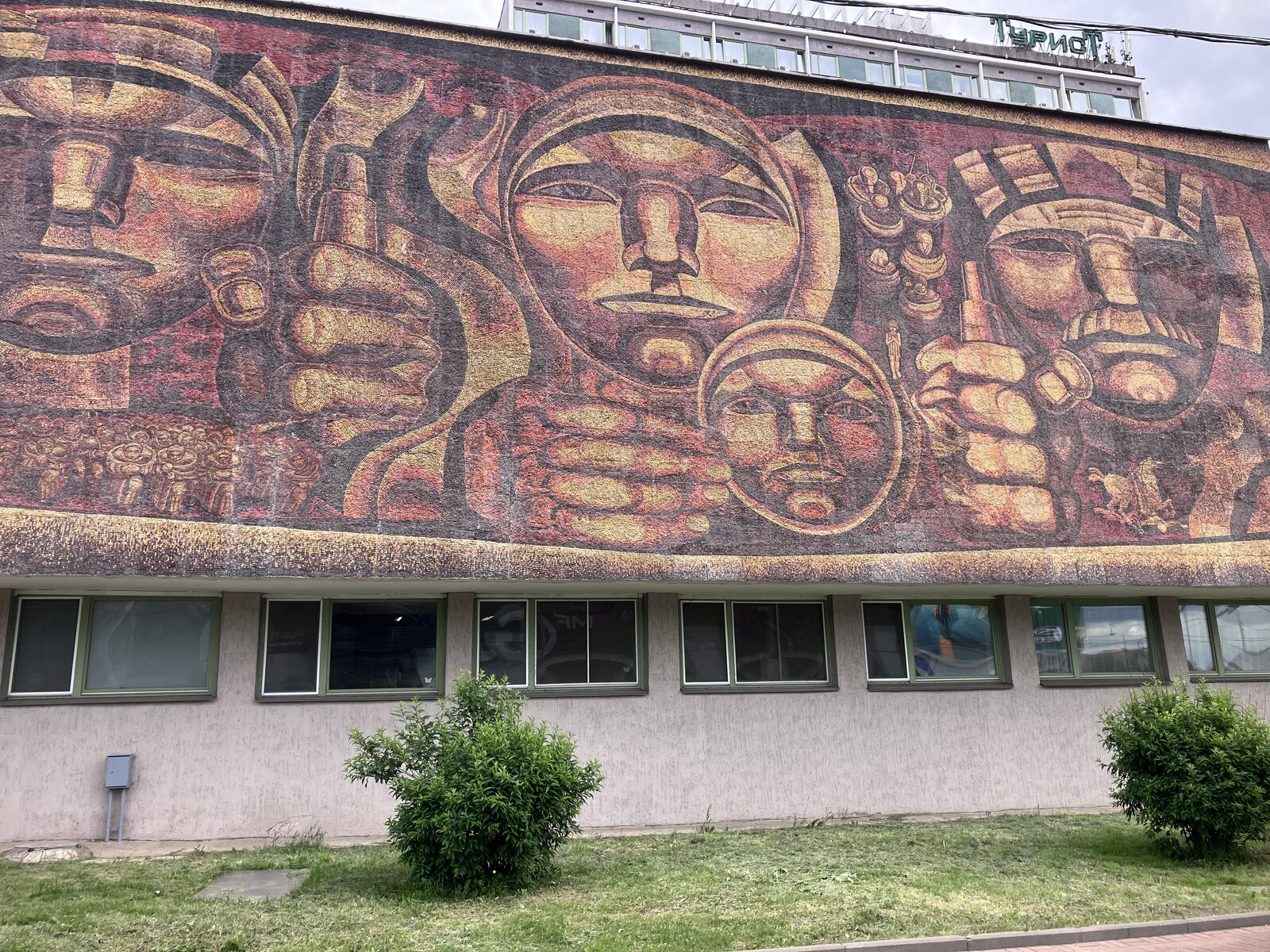
The building has changed function more than once (it now houses a children's and youth centre), but the façade decoration has been preserved. Worth a short stop if you're already visiting the Vostok-1 towers — it's a 10–15 minute drive away.
How to plan the route
- 1.Start at the Vostok-1 towers (Vostok metro station) — the most striking and photogenic stop.
- 2.Head to Oktyabrskaya metro station and go down into the passage to see the Kuznetsov mosaic.
- 3.Finish at the former Dom Kino building on Talbukhina Street to see the frieze.
If you're passing through Minsk between flights or have a few free hours, a ComfortLine driver can take you along this route in a comfortable car with stops at each site — no need to figure out public transport.
Ready to book?
Our manager will contact you shortly with an exact price.
Book a Minsk transfer and city tourRead also
How to Get from Minsk to Vilnius Airport (VNO): All Options 2026
Complete guide to reaching Vilnius Airport from Minsk in 2026: private transfer, bus, minibus — travel times, prices and an honest comparison.
ReadWarsaw Chopin Airport (WAW): Complete Guide for Travelers from Belarus
Everything about Warsaw Chopin Airport for passengers from Belarus: terminals, check-in tips, transfer options and how to get there from Minsk.
Read